Application honesty
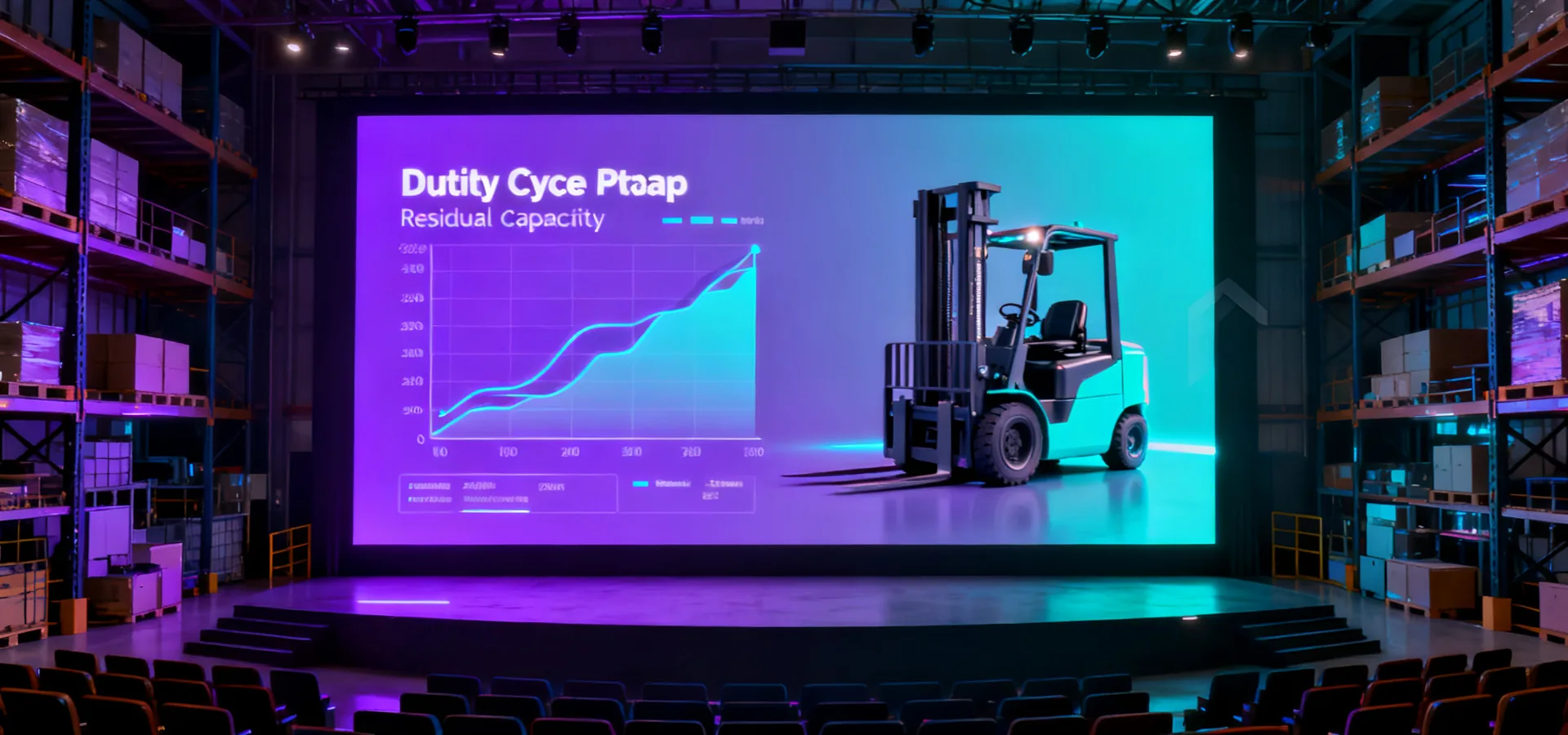
Load center, aisle clear width, duty cycle and residual capacity are captured before class selection. Lithium, diesel and fuel-cell options are compared against the same mission profile.
Hangcha focuses on forklifts, stackers and pallet handling equipment where adaptive warehouse flow, residual capacity and measurable acceptance remain visible from concept through operational handover.
Each horizon names the operating question it answers. Planning ranges below are generated-range orientation values from brand configuration and are not independently verified public claims.
Load center, aisle clear width, duty cycle and residual capacity are captured before class selection. Lithium, diesel and fuel-cell options are compared against the same mission profile.
Manned trucks, AGV and AMR fleets share documented traffic rules, charging parks and exception ownership with WMS/WCS release logic.
Digital Twin Lab scenarios link peak windows, buffer occupancy and recovery drills to FAT/SAT evidence before live aisle authority transfers.
Diagnostics, critical spares and restart authority remain human-reviewable even as assisted missions expand across multi-client distribution centers.
Dates and headcount figures are planning-band references from brand configuration (founding year 2009, experience 17 years, team 250+, countries 12, catalog 900+). They must not be treated as certified public facts.
Industrial truck application focus established as a planning-range starting point for Hangcha conversations.
Electric, lithium, reach, stacker and pallet-handling lines expand under a shared load-and-duty review method.
Traffic rules, scanner fields and WMS/WCS handshakes enter acceptance packs alongside residual capacity checks.
Simulation, emulation and orchestration reviews help buyers stress peak windows before cutover.
Industrial truck projects fail quietly when residual capacity is quoted without load center, or when peak pallet moves ignore replenishment and exception recovery. Hangcha keeps those boundaries written: which mission needs which truck class, which aisle clear width is assumed, and who authorizes a return to automatic mode after isolation. Throughput discussions stay attached to SKU velocity, order profile, peak duration, buffer occupancy and duty cycle rather than a single clean-run screenshot.
Brownfield workstreams treat active fulfillment as a constraint. Cutover plans preserve fallback paths, maintenance access and evidence packages that remain usable after the project team leaves. When fixed automation and flexible robotics share the same campus, Hangcha records the aisle-width and SKU-velocity assumptions that favor each path instead of collapsing the choice into a slogan. System availability measured at truck level is separated from end-to-end availability after WMS, WCS and fleet handshakes are included.
Logo tiles below are role placeholders for integration partners—not verified customer endorsements or certification marks. Brand configuration lists no verified product certificates for Hangcha, so certificate logos are omitted.
Share the load profile and aisle constraints so engineering can route the next conversation correctly.
Contact Hangcha